On Tuesday, June 16, a new public monument bearing the title Pomník lhostejnosti [Monument to Indifference] was unveiled in Prague. Created at the initiative of the Platform for Social Housing in cooperation with the Czech Streetwork Association, the street medicine initiative Medici na ulici and the support of Prague’s Food not Bombs, it commemorates the deaths of the unhoused throughout the Czech Republic – per official statistics, over 6,000 in the 2010-2022 period, a figure that understandably falls far short of the reality. Facing a genuine polycrisis of hyper-extreme housing unaffordability, punitive social-welfare policies, unthinking cuts to substance-abuse programs, and toxic online discourse, a solitary work of public art may seem deeply, indeed tragically inadequate. Yet even as one gesture of unforced sympathy, a single candle in the darkness, the Monument to Indifference not only reminds the passersby hurrying through the grim concrete tunnel of our essential common humanity but invokes a sense of artistic dignity for the thousands of deaths sorely deprived of it.
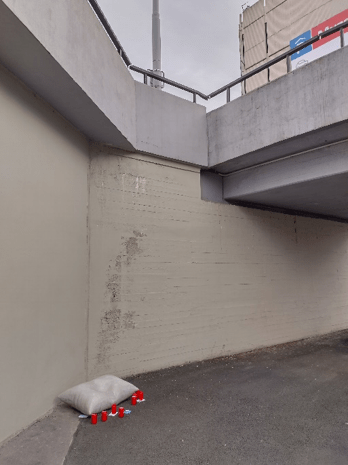
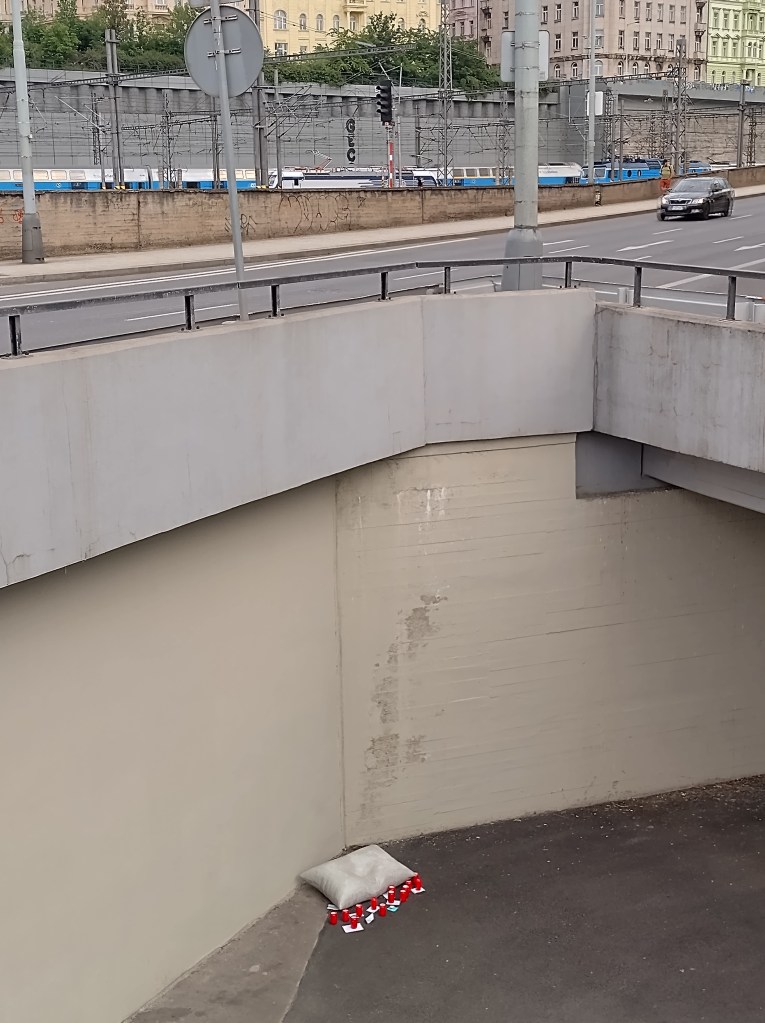
The monument itself – the work of artist Jakub Janovský – is modest to the point of near self-effacement: a concrete pillow, positioned at the wide-angled corner of the walkway leading under the central motorway from the Muzeum parking garage to Prague’s main rail station. Small enough to seem merely a piece of urban detritus, half-camouflaged by the grey of its material vanishing into the identical surfaces of the roadway infrastructure, its message, indeed its own status as an artistic intervention, is underscored only by an equally modest metal plaque on the wall, itself placed a few metres to the left.
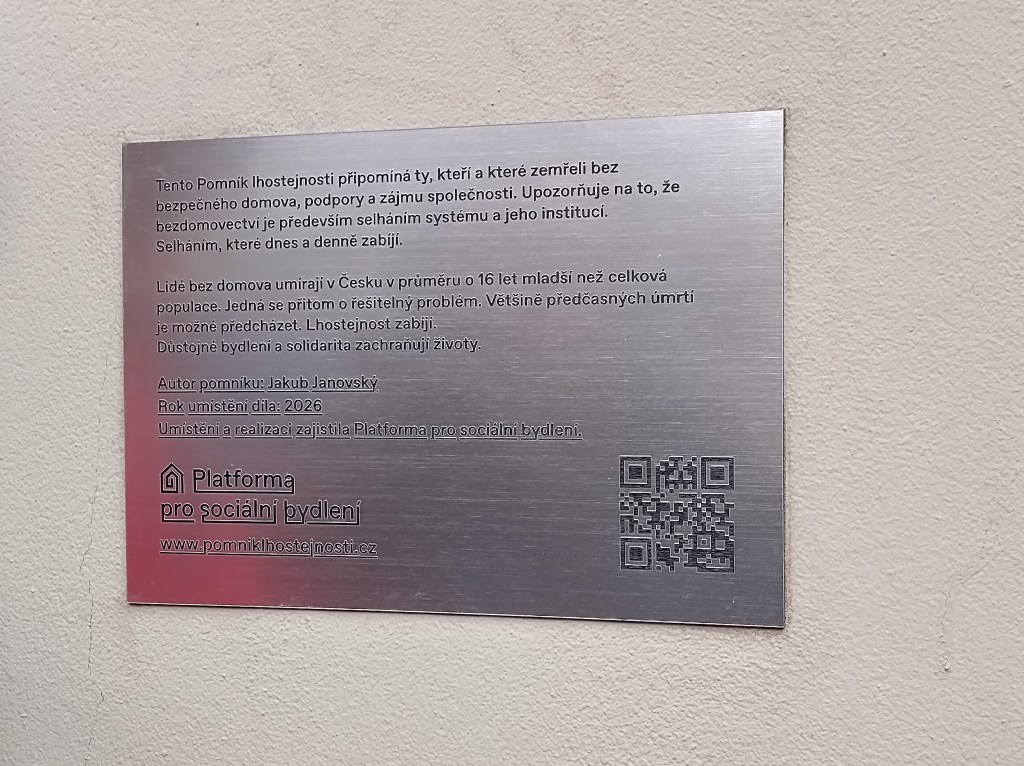
Its text in English: “This ‘Monument to Indifference’ remembers those who died without a safe home, without the support and interest of society. It reminds us that homelessness is primarily a failure of the system and its institutions. A failure that kills today and every day.
“Homeless people in the Czech Republic die on average 16 years younger than the overall population. And yet it is a solvable problem. Most premature deaths can be avoided. Indifference kills. Dignified housing and solidarity save lives.”
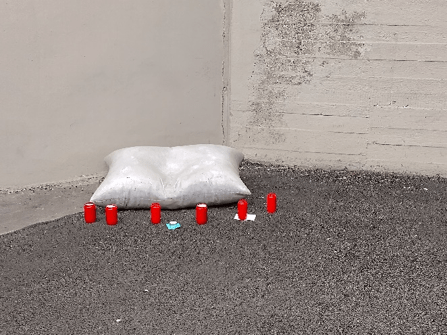
As for the pillow, though, it bears the unmistakable imprint of a human head. In other words, the trace, the imprint, the reverse impression of a person no longer there, indeed no longer in this world. A life now anonymous, unmourned, for much of society even unmournable, yet a life nonetheless. As Janovský himself said during the unveiling, the pillow directly invokes the comforts of home, or even the momentary instant of comfort of homelessness, recalling not the humiliation of a death on cold grimy asphalt but the home that the deceased must, at least at one point in his/her/their life, have had. Like the hard grey matter depicting softness and gentle rest, the hard grey synecdoche of absence is itself disturbing in its contradiction: both a respectful homage to the unhoused dead and a fervent admonition to the (purportedly housed) living.
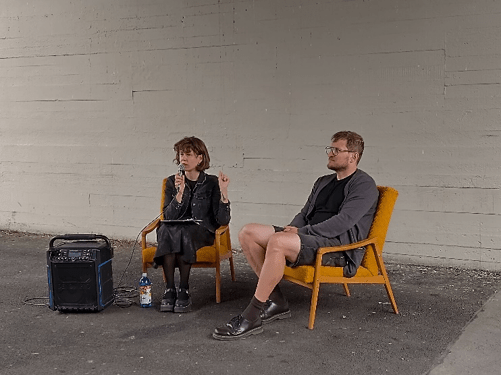
Barbora Bírová, head of Platform for Social Housing,
with Jakub Janovský during the unveiling
Yet if the pillow itself is disturbing, its soft hardness (hard softness) perhaps echoing the all-too- pleasant warmth of death by hypothermia, its setting – and here I mean both the physical environment and the society that made this artwork necessary – cannot but be described as disturbed. Prague’s main rail station has for nearly four decades served as a central location for its dispossessed, even to a limited extent before the Velvet Revolution of 1989. In the long and extensive history of Prague’s topography of the impoverished, this bristling Secessionist cliff rising above the ocean of automotive traffic has offered them refuge, all too often the last. Even despite the station’s expensive makeover over a decade ago, and more recently the threat of still worse alterations, its place remains in an enforced psychogeography of survival-situationism, the unhoused countermaps of safety in an indifferent world.
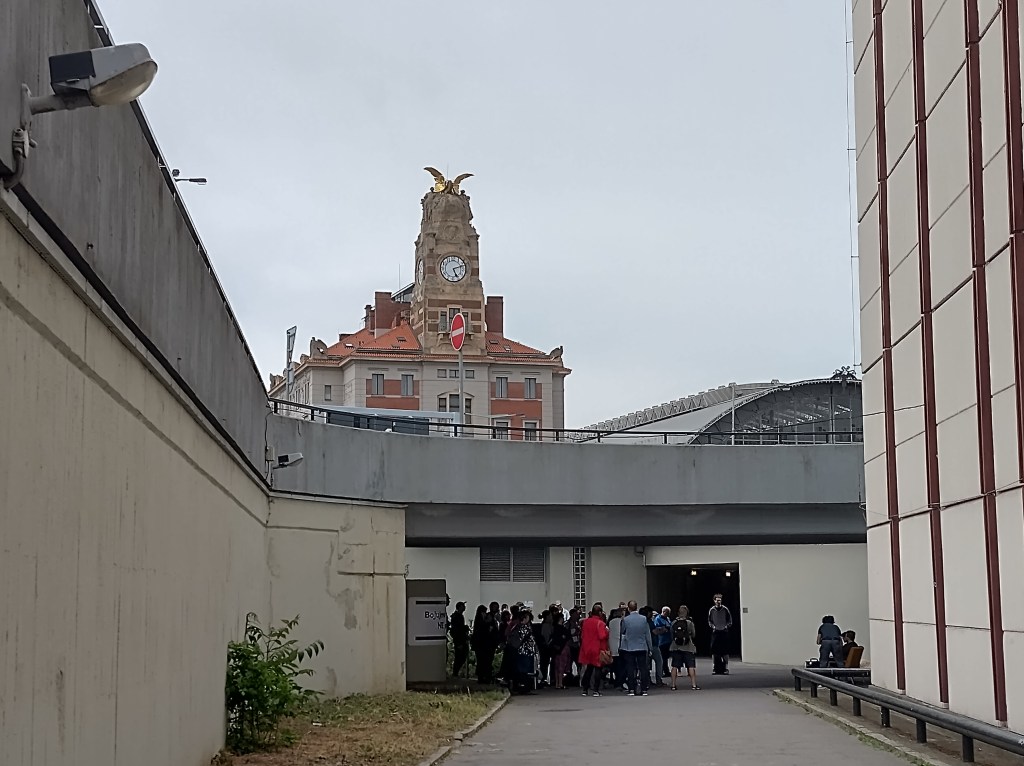
For reflecting on spatial justice – and it should be remembered that these questions lie at the heart of contemporary urban unhousing, if not in fact de-housing – the very setting of the Monument to Indifference is a provocative one. The roadway of Prague’s “magistrala”, an essentially crass and stupid imposition of twentieth-century technicism on the urban fabric, reminds us today that even state socialism in its last decades succumbed to the privatism of mass automobile ownership and servile catering to the needs of the car. Whether one is enclosed in a steel carapace or merely within economic privilege, indifference can itself be encouraged, perhaps even mandated, by the structures of a physical environment. The disorienting labyrinth of passageways, stairs, ramps, crosswalks and tunnels necessary to reach the Monument by foot, in turn, could recall in a more sensitive observer the existence of (non-physical) structural barriers that ensure those who fall into the social cracks are likely never to make their way back out. And in turn, the likely future of the Monument itself, facing whatever graffiti, litter, excrement, or further indignities it could bear in its obscure corner, hangs over its still-new contours like a grim memento mori.
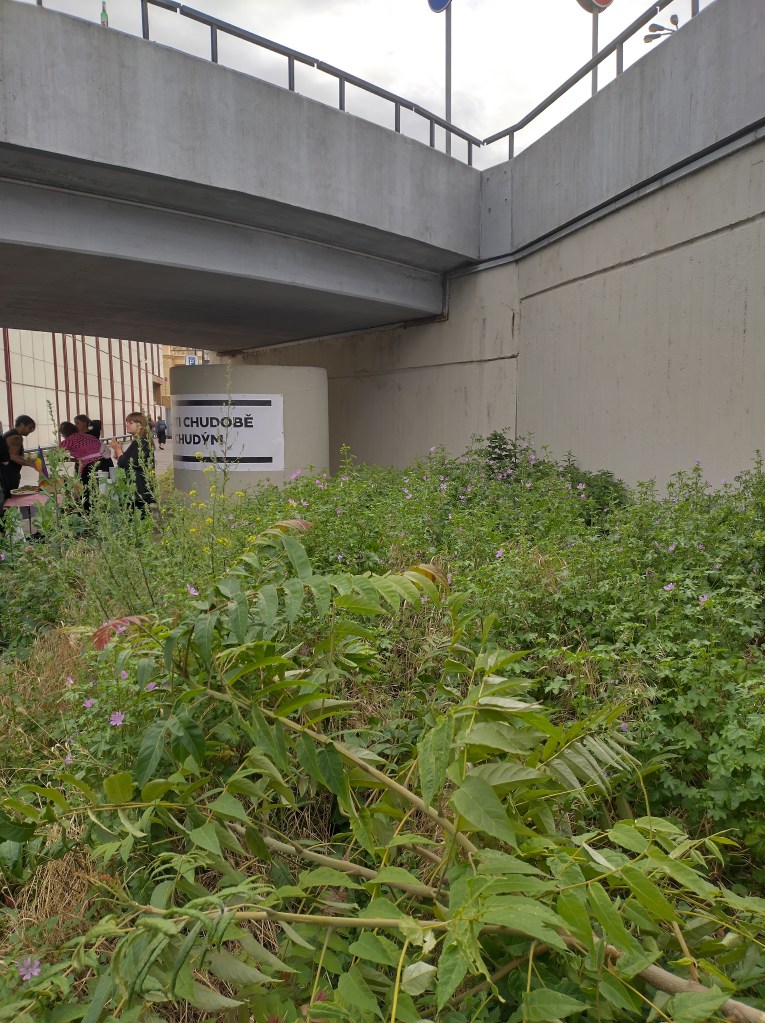
Still, the Monument to Indifference – rightly – does not encourage pessimism or despair. Its very existence, against a dispiriting political backdrop of oligarcho-populism, shopworn free-market nostrums, and zombie-socialist denunciations of even the mildest critiques of neoliberalism, is itself a heartening development. Organizations like the Platform for Social Housing manage, despite the odds, to perform useful work. And even in the concrete hole, hemmed in by roaring traffic, the space of the monument is softened by a small “wild-garden” of flowering weeds, summoning a spirit of peace for those whose premature deaths it commemorates. For it is the dead – and the injustice that brought them to this point – who here truly deserve our attention.


Leave a Reply