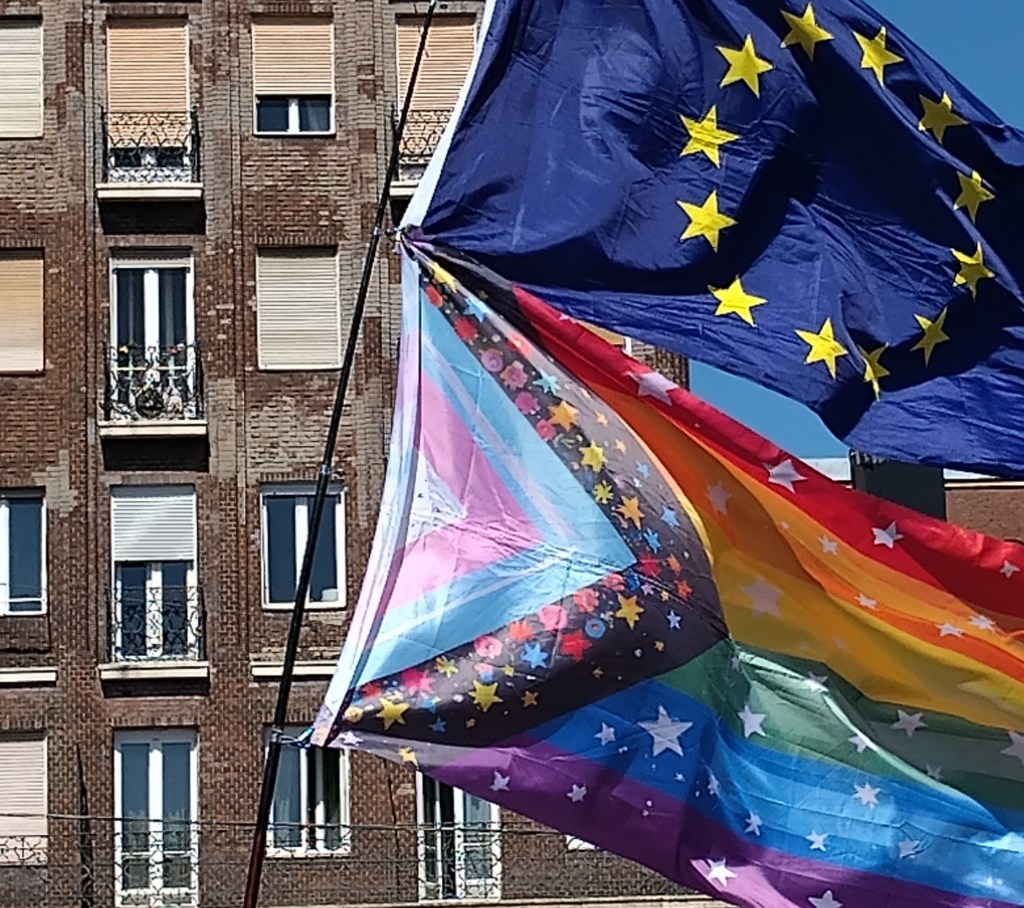
The Start.
14:00, in the tunnels of the Budapest metro system at Deák Ferenc tér, the central intersection of three lines. A few first sightings of rainbow garb or décor among the crowd, passing around the ticket inspectors with their rather disturbingly fascistic-looking armbands.
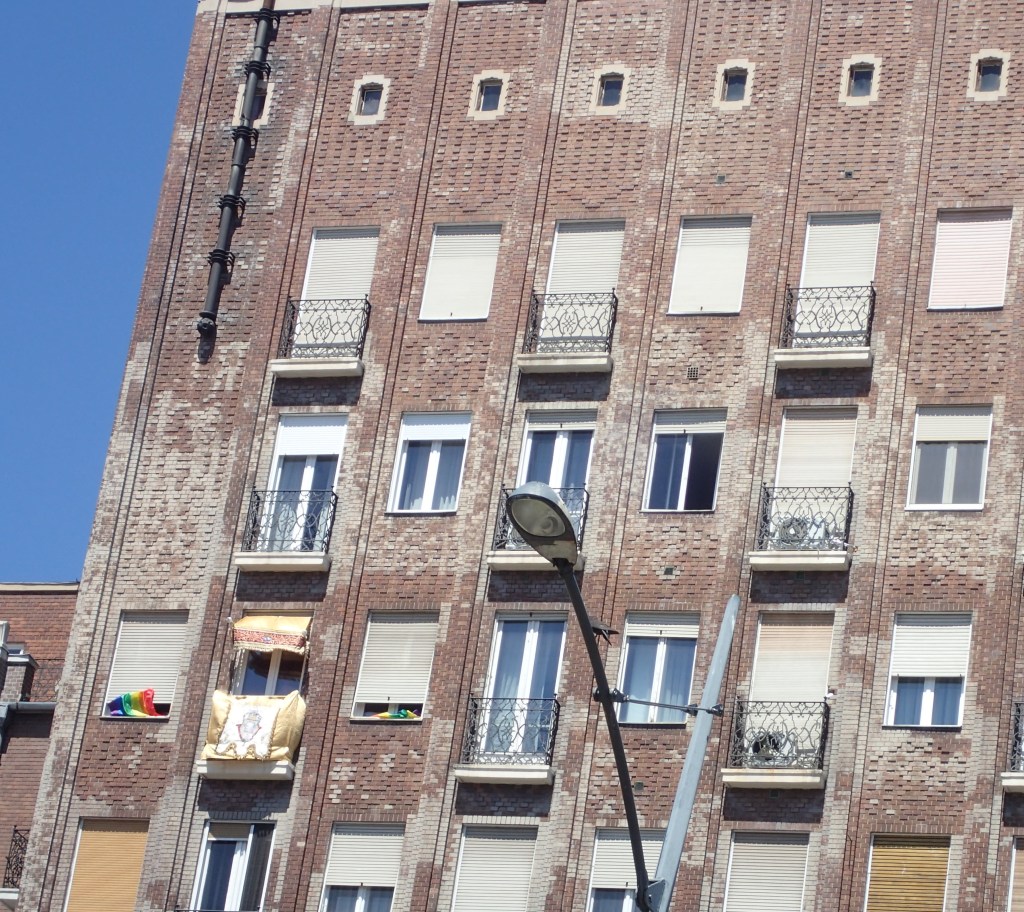
Up at street level. The square has far less of the fin-de-siecle grandeur for which Budapest is renowned; to one side is the small austere Lutheran Church, to the other, the red-brick cliff of the Madách-ház, the 1938 apartment complex at the start of Király utca and the sole testament to a never-realized massive rebuilding of central Pest under the Horthy regime. Somehow, the right-wing connotations of this backdrop, from the abstracted classicist ornament to its historical erasure of the one-time Jewish community centre of the Orczy-ház (demolished 1936), seem a bit too appropriate for the present.
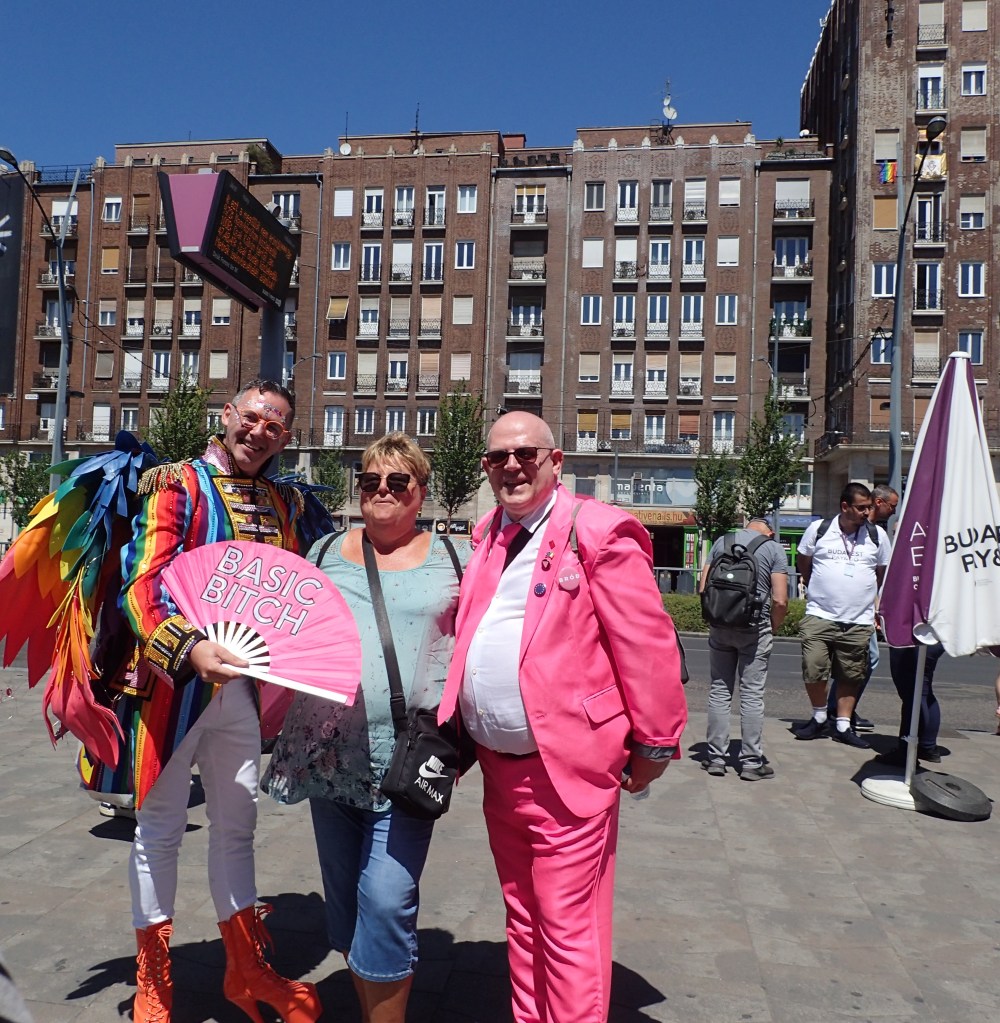
And then, just to the southeast, in the next section out from the boulevard, it’s impossible not to remember the Jewish Ghetto of 1944. Now, in a particularly grotesque turn of history, the ghetto is the official “Party District” (bulinegyed); the streets trod by drunk European youth passing from one interchangeable night venue to the next, spilling pulled pork or vomit across the Stolpersteine. Knowing the threats that the Hungarian national government has made against participation in Budapest Pride, the savage fines and ever-present technosurveillance, the careful observer – especially one with experience from the past century – I do my best to describe and photograph the setting over the participants. A wretched situation, even if the memories encoded into the backdrop are still more disturbing.
But the crowd is still growing, and almost entirely with faces exposed – only a few paper masks, usually bearing the well-known caricature of Viktor Orbán in lipstick. It begins to spread across the tramlines of Károly körút, into the smaller square in front of the archway. Under the relentless sun of the Pannonian plains, shade is both welcome and rare. A strip of small trees between the tram tracks promises some relief; meanwhile, several trucks are being stripped of their canvas covers while DJs set up their turntables. Soon, the music begins; closest to us, it appears, the motif is to celebrate the thirtieth anniversary of Budapest Pride with the dance hits of 1995. Much of the crowd clearly would not have been alive back then – but many others would, far more than I expected.
Already three-quarters of an hour have passed and the group has not yet begun to move. From my restricted observation point among the fortunate shelterers under the tree-strip, I hear an occasional cheer come up when someone prominent is sighted. The loudest is for Budapest’s progressive mayor, Gergély Karacsony, and deservedly: he took the stand to declare Pride 2025 a city event rather than a national one, so that the police could not legally intervene. Courage all too rare in these days of illiberal rollback…
But now the crowd is visibly moving, heading along Budapest’s inner boulevard to the “Freedom Bridge” (Szabadság-híd), or so the maps indicate, then across the Danube to the embankment beside the Academy of Fine Arts. Out again into the Pannonian sunlight. The entire street is filled, ahead and back; now surging into motion. And looking upward, on the grim brick front of Madách-ház, all of a sudden I see a rainbow flag in one window. Then a second. Or a group standing on the balcony, waving their own flag and cheering.
 concrete eye
Leave a comment